Beginner Tips
Learn how to survive the opening hours, avoid early mistakes, and keep your city stable.
DarkSwitch Wiki
Use this DarkSwitch wiki to learn the basics faster, stabilize your first settlement, understand resources, and prepare for the Fog before your campaign collapses.
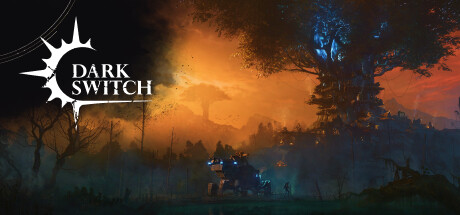
DarkSwitch is a vertical survival city builder developed by Cyber Temple and released on April 9, 2026 for PC on Steam and GOG. The game's core premise is unlike most city builders: instead of spreading a city across an open plain, players build upward through the branches and trunk of a gigantic 200-meter tree. That single structural choice creates a different kind of spatial puzzle. Every new layer must connect to what exists below it, and every decision about placement, access, and support has lasting consequences.
The city is built in darkness. The Fog creeps in from the world below, threatening citizens, hiding creatures, and testing the settlement at every stage. Players defend the city by managing light and flame, constructing safe routes, and preparing the settlement to resist external pressure rather than simply reacting to emergencies as they arrive. Akira Yamaoka, best known for composing the Silent Hill soundtrack, created the music, and that choice says something meaningful about the tone the developers were trying to create.
Public descriptions also emphasize that DarkSwitch is not a pure systems sandbox. The campaign follows four main protagonists through a branching narrative with quests, side missions, and moral choices that can spiral from small actions into grim consequences. The city is both the mechanical canvas and the emotional setting of that story.
Most city builders eventually become a matter of space management and production ratios. DarkSwitch preserves that core but adds survival pressure, narrative weight, and a distinctive setting that most competitors do not attempt. The vertical structure means there is no sprawling flat grid to optimize with pure efficiency logic. Every cluster of buildings must account for its neighbors above and below, for movement between layers, and for whether the city can realistically protect what it is adding.
The survival layer is equally distinctive. Resources are scarce, citizens are afraid, and the Fog is not a fixed challenge that appears once and then gets solved. It is an ongoing pressure that the city must live with throughout the campaign. Players are not building a prosperous empire that eventually outgrows its threats. They are building a settlement that learns how to survive inside the threat.
That combination of vertical builder logic, survival economy, narrative choices, and a consistent dark-fantasy atmosphere is what gives DarkSwitch its identity. Reviews and previews from PCGamer, GamesRadar, and others noted those same qualities, which is why the game drew comparisons to Frostpunk even before release.
A DarkSwitch beginner guide needs to explain that survival is not only about building more structures. The game’s public feature descriptions point to a system where raw and processed resources, citizen morale, production flow, and defensive preparation all interact. Some references describe 11 resource types, while another early press source mentions 10 distinct resources split between raw and processed goods. For the site, the safest SEO-friendly approach is to state that DarkSwitch features a multi-resource economy with more than ten critical materials and production chains, then expand the exact list only after every item is verified through in-game play or official updates.
This matters because new players often fail by reading the game as a standard city builder. DarkSwitch appears to reward controlled growth more than reckless expansion. Limited horizontal space means the settlement has to grow vertically, and that changes the usual building logic. Travel routes, stairways, zip lines, adjacency, production bottlenecks, and access to safe illuminated paths all become part of the planning puzzle. A useful DarkSwitch buildings guide should therefore focus not only on what each structure does, but also on when to build it, where to place it, and how it affects future expansion.
The Fog adds a second layer of pressure. Public descriptions explain that players must manage light and flame, craft light-powered tools or weapons, and protect citizens from the psychological and physical danger of darkness. This is one of the main reasons people search for a DarkSwitch fog defense guide. Surviving probably depends on more than walls or towers alone. It likely depends on path safety, visibility, timing, and how well the city’s economy supports a stable defensive network. That connection between economy and defense should become one of the main ideas repeated across the whole wiki.
DarkSwitch is not limited to base management. Official descriptions and third-party coverage both point to exploration as a major pillar. Players send pioneers or scouting groups into the Fog to uncover ruins, establish far-outposts, chart routes, and recover rare resources or artifacts. That means exploration is not just side content for flavor. It appears to be tied directly to growth, long-term progression, and worldbuilding. For SEO purposes, this gives the site strong page opportunities around DarkSwitch exploration guide, DarkSwitch outposts, DarkSwitch ruins, and DarkSwitch artifacts.
Technology progression is another major system that deserves its own guide page. Public descriptions consistently mention four technology levels that unlock new tools, buildings, and expansion options. Even before a full tech tree can be documented node by node, the site can already publish a useful DarkSwitch tech tree guide by explaining the pacing logic: early survival stability, midgame production support, better Fog control, and broader strategic options through later unlocks. That kind of page is valuable because it answers a planning question, not just a trivia question.
Story is the final piece that makes DarkSwitch more than a systems-heavy builder. The official site and coverage both emphasize branching storylines, morally difficult decisions, and grim consequences that can grow from small actions. That creates a clear user intent for pages like DarkSwitch story choices, DarkSwitch endings, or DarkSwitch campaign decisions. Even before every branch is fully mapped, the wiki can help players by explaining which choices seem to affect morale, safety, exploration risk, and long-term settlement direction. In other words, this site should treat strategy and story as connected systems, because DarkSwitch clearly presents them that way.
DarkSwitch is a vertical survival city builder set on the branches of a gigantic tree rising above a world swallowed by the Fog. Instead of expanding across a wide map in the usual city-builder style, players have to think upward, fitting homes, production buildings, logistics paths, and defenses into a limited vertical settlement where every level matters. That structure alone makes DarkSwitch stand out, but the real tension comes from the pressure of survival. The Fog is not just background flavor. It is a constant strategic threat that shapes expansion, defense, exploration, and long-term planning.
The public descriptions for DarkSwitch consistently emphasize a mix of city building, resource management, exploration, and difficult choices. That makes the game feel broader than a simple builder and more demanding than a pure tower defense game. You are not only trying to place efficient buildings. You are trying to keep a fragile community alive while balancing space, labor, safety, production, and fear. For players searching terms like DarkSwitch wiki, DarkSwitch guide, or DarkSwitch beginner tips, that mix of systems is exactly why a structured guide hub is useful.
DarkSwitch also has a strong atmosphere. The official site and store page describe a dark fantasy or folk horror world built around creeping dread, scarce resources, and a mystery connected to the Veil. On top of that, the soundtrack has been highlighted as a major part of the experience because it is composed by Akira Yamaoka. That combination of oppressive setting, survival management, and narrative tension gives the game a clear identity. This wiki should lean into that identity instead of reading like a generic strategy site.
A good DarkSwitch wiki should do more than repeat store page text. Players usually search for a DarkSwitch walkthrough or DarkSwitch guide because they want practical answers: which buildings matter first, how to avoid resource collapse, when to expand upward, how to prepare for the Fog, and whether story choices have long-term consequences. The goal of this site is to answer those questions in plain English while also organizing information into pages that are easy to scan, easy to link internally, and easy to expand as more verified details appear.
The biggest reason to build a dedicated DarkSwitch wiki is that the game combines several strategy layers at the same time. The settlement is vertical, space is limited, multiple resource types interact with each other, new technologies unlock through progression, and exploration pushes the player into unknown territory outside the safety of the tree. That means beginners can lose because of layout mistakes, weak supply chains, bad timing, or simple overexpansion. A wiki that only summarizes the story would not be enough. Players need a resource guide, a buildings guide, a fog defense guide, an exploration guide, and a story choices guide that all connect to each other.
This homepage is designed to work as the central entry point for those searches. It should immediately explain what DarkSwitch is, highlight the most important mechanics, send new players toward the beginner guide, and surface supporting pages for buildings, resources, exploration, and defense. That structure is useful for readers, but it is also good for SEO because it creates strong internal linking around a clearly defined keyword cluster: DarkSwitch wiki, DarkSwitch beginner guide, DarkSwitch buildings guide, DarkSwitch resource guide, and DarkSwitch story choices.
Learn how to survive the opening hours, avoid early mistakes, and keep your city stable.
Understand key structures, city layout priorities, and vertical expansion choices.
Balance raw and processed goods so your settlement does not stall.
Prepare light, flame, and defensive planning before the Fog overwhelms your city.
Trailers and walkthroughs (lazy-loaded). Click a title to expand the player.
Official trailer highlighting the vertical city builder, Fog, and dark-fantasy atmosphere.
Hands-on walkthrough of the early game covering worker shifts, building decisions, and exploration.
DarkSwitch - First Look - Building a City up a Tree for ominous reasons
DarkSwitch - Gameplay
Browse the main strategy guides — from early survival to fog defense, exploration, and tech.
Opening priorities and common early mistakes.
Vertical layout and building priorities.
Production chains, labor, and bottlenecks.
Light, fear, safe paths, and survival.
Pioneers, ruins, outposts, and artifacts.
Research priorities and four technology levels.
When did DarkSwitch release?
April 9, 2026 on PC (Steam and GOG).
What type of game is DarkSwitch?
A vertical survival city builder with dark-fantasy setting, Fog defense, and branching campaign.
How many languages does DarkSwitch support?
Six languages including English, German, Polish, Russian, Simplified Chinese, and French.
DarkSwitch is a vertical survival city builder where you construct a settlement on a massive tree, manage scarce resources, research technology, and defend your people against the Fog.
DarkSwitch currently supports six languages on Steam: English, German, Polish, Russian, Simplified Chinese, and French.
Most beginners should focus on stable resource flow, careful expansion, and early Fog preparation instead of rushing growth without enough support buildings.
Yes. Public store descriptions and media coverage both emphasize difficult moral decisions, branching narrative outcomes, and campaign-driven progression.
The main and most important store link for the site should point directly to the official Steam page for DarkSwitch.